#MacroFriday: European Inflation
Almost two weeks after the escalation of the Iran conflict, European consumers may be starting to feel the impact in their wallets.
Europe entered this shock with headline inflation in the euro area at 1,9% in February 2026, while the energy component was still -3,2% year-on-year. This starting point matters: an oil price spike can quickly turn energy from a drag on inflation into a source of upward pressure. However, the extent to which higher oil prices feed into consumer prices will depend largely on the duration of the conflict, price developments of substitutes and the strength of pass-through along supply chains. The International Energy Agency has already announced a record release of 400 million barrels from strategic reserves to contain the rise in oil prices. Yet the new Ayatollah Mojtaba Khamenei stated yesterday that the Strait of Hormuz will “remain closed,” reversing the brief decline in oil prices seen earlier.
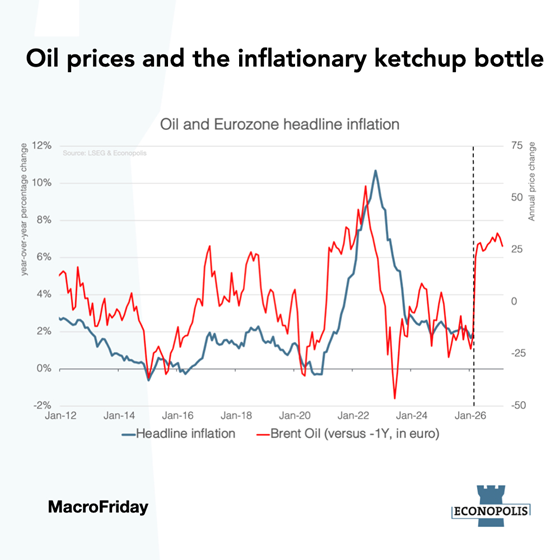
History shows how quickly energy shocks can ripple through the economy. Think back to the “ketchup bottle” analogy in 2021, when higher energy prices gradually spilled over into a wide range of goods and eventually services. At the time, other catalysts amplified the process, but the effects proved persistent. Lagging services inflation in the euro area remains above target today, having stayed above target since October 2021. For now, financial markets appear to view the current oil price surge as temporary. Inflation expectations for the euro area in 2026 have risen to around 2.8% year-on-year, while medium- and longer-term expectations remain anchored close to the ECB’s 2% target. In other words, markets do not yet expect a broad pass-through into underlying inflation. However, if the conflict drags on and energy prices remain elevated for longer, this assessment could start to shift and economists may once again be talking about ketchup bottles.