#MacroFriday: US Inflation
In this week’s MacroFriday, we look briefly at the current inflation dynamics in the US economy. The US Consumer Price Index rose 0,2% month on month in January. As last year’s sharp rise of 0,5% in January fell out of the index, headline inflation fell to 2,4% in January, from 2,7% in December. Annual core inflation eased to 2,5%, the lowest reading since March 2021. President Trump was eager to highlight this in last week’s State of the Union: “But in 12 months, my administration has driven core inflation down to the lowest level in more than five years.” If we look at the graph, we do find the lowest core inflation reading in a while, but this doesn’t necessarily mean American households are less worried about higher prices. Furthermore, the Federal Reserve’s preferred inflation metric, changes in the PCE price index, actually increased to 2,9% in December, up 0,4% from the preceding month. Core inflation under this metric stood at an elevated 3,0%, barely showing signs of easing.
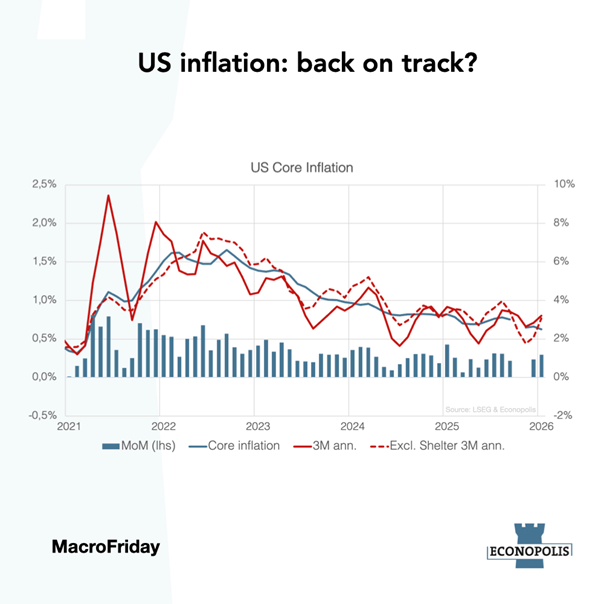
Month-over-month changes in the price level are often higher in January, as companies adjust their prices at the beginning of the year. However, this year’s rise in core inflation of 0.3% was remarkably low. Since Liberation Day, the US price level has seen limited upward pressure, implying strong absorption in companies’ margins. Likely, they are only slowly passing on these higher costs to their end clients. Nonetheless, with inflation levels holding up above target for more than five years now, the debate over affordability for American households will likely take centre stage heading into the midterm elections in November.