Stijn Plessers holds a degree in Economics (Catholic University of Leuven). He started his career in 2006 at a private bank and then worked for KBC Asset Management for 15 years. At KBC AM, he was originally responsible for managing a large credit and OTC derivatives portfolio before focusing entirely on equities. First as an analyst for the technology sector and then as a manager of specialized, global equity mandates. In April 2023, Stijn made the switch to Econopolis Wealth Management.
Agriculture at the forefront of Physical AI
Notwithstanding fairly stable to declining prices of food commodities, the stocks of the agriculture producers are breaking out. In line with a stock market that currently prefers 'atoms over bits', we recently see a strong increase in agriculture-related shares. While commodity prices usually lead producer stocks, this time there seems to be more going on under the hood - let’s have a closer look.
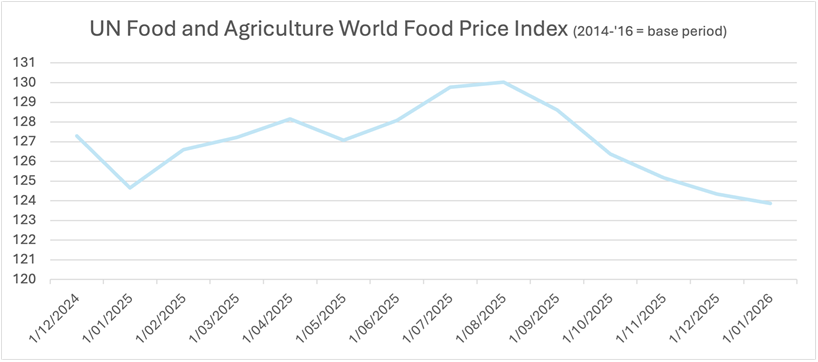
The ‘UN Food and Agriculture World Food Price Index’ is a globally recognized benchmark used to track the monthly change in international prices of a basket of food commodities. It essentially serves as a "cost of living" indicator for the global food market. The index tracks the prices of roughly 24 basic food commodities (derived from 95 price quotations) divided into five categories: cereals, vegetable oils, dairy, meat and sugar. Typically, these prices are a leading indicator for seed and fertilizer companies (like Nutrien, Mosaic, or Corteva); these stocks react within 3–6 months of a sustained rise in food prices. Equipment manufacturers, sellers of big-ticket items like tractors and harvesters (like John Deere, AGCO, Kubota or CNH) are of course lagging and their order books often only peak with a year's delay.
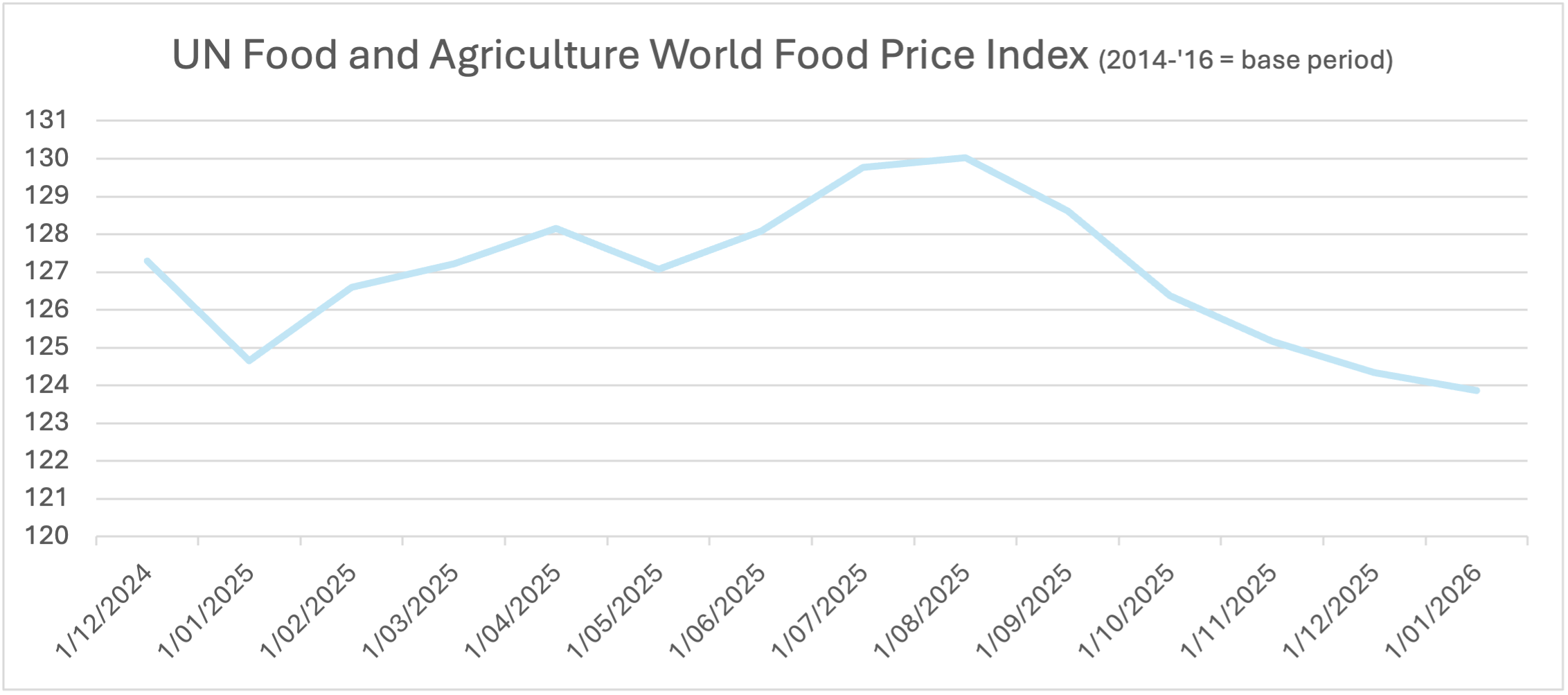
Bron: https://www.fao.org/worldfoodsituation/foodpricesindex/en
Despite the absence of much higher food prices, the "Big Four" in seeds and fertilizers (Nutrien, Mosaic, Corteva and Yara) are currently enjoying robust global demand for nitrogen and potash-based fertilizers. But at the same time these companies are also undergoing various strategic business transformations. In October Corteva announced a plan to split the company into two independent, publicly traded, "pure-play" companies. This strategic separation is intended to divide the business into a specialized seed company and a specialized crop protection (~ chemicals) company, with the transaction expected to be completed in the second half of 2026.

Bron: https://www.corteva.com/
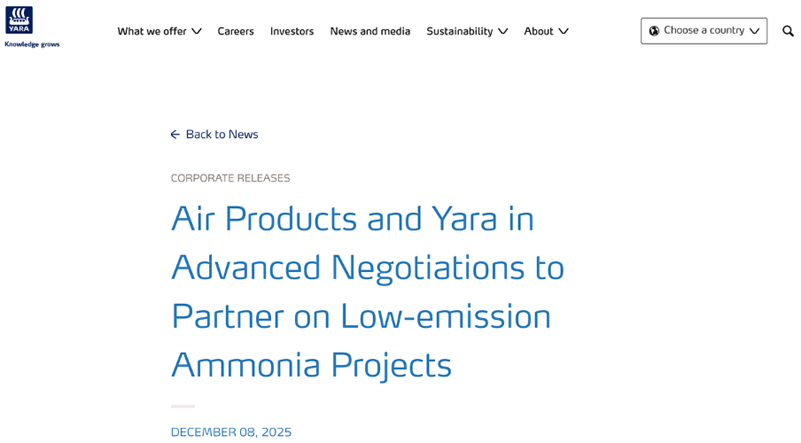
In the case of Yara, investors are particularly watching their final investment decision on clean ammonia projects, expected in mid-2026. Yara is in advanced negotiations with Air Products to participate in the new, multi-billion Louisiana Clean Energy Complex. This project, designed to provide cost-competitive blue ammonia by leveraging low-cost US natural gas and carbon capture, would allow Yara to decarbonize its fertilizer production in line with the company’s long-term goals.
Bron: https://www.yara.com/corporate-releases/air-products-and-yara-in-advanced-negotiations-to-partner-on-low-emission-ammonia-projects/
Between the 2 North American fertilizer giants; Nutrien and Mosaic, the latter is often considered the ‘value’ play while Nutrien is considered the ‘growth’ leader because of heavy investments in digital platforms. These use soil data and satellite imagery to help farmers decide exactly how much fertilizer to apply.
It is precisely this enthusiasm surrounding the adoption of technology in the agricultural sector that seems to be also driving the stocks of the equipment manufacturers. As these manufacturers are leading the way in the rise of 'physical AI'; moving beyond dashboards into an era where AI doesn’t just advise but acts, their shares prices seem to be rewarded. The shift from digital agronomy to physical AI is accelerating, as systems that once interpreted sensor and satellite data now deliver real‑time, plant‑level interventions in the field. This new revenue composition, away from selling high-value items towards more recurring platform revenue, is being rewarded by investors with higher multiples.
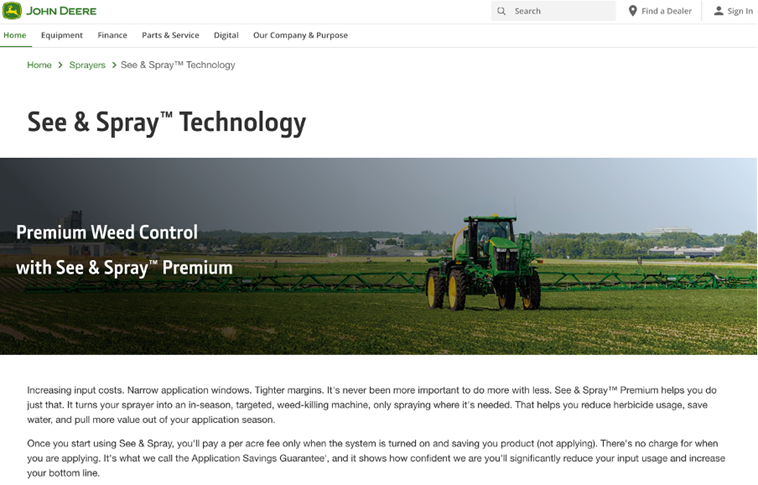
Among industry incumbents, John Deere is probably best known for advanced technology. The company is developing autonomous tractors, leveraging AI with satellite imagery to monitor crops more effectively, assess field conditions, and optimize resource allocation. It’s proprietary ‘See & Spray’ computer vision is designed to differentiate between crops and weeds, allowing for herbicide application only on targeted weeds rather than the entire field.
As with any new technology, there is also a rich startup community in agriculture equipment. Verdant, founded in 2018, is good example of a private company innovating in the same space. The company develops mobile autonomous robotics for high‑value specialty crops. At the core of Verdant’s platform is the ‘Sharpshooter’, a turret‑based precision actuation system built around the company’s “aim‑then‑apply” architecture. The technology identifies every individual plant, predicts optimal shot opportunities, and delivers inputs with millimeter‑level accuracy in milliseconds.
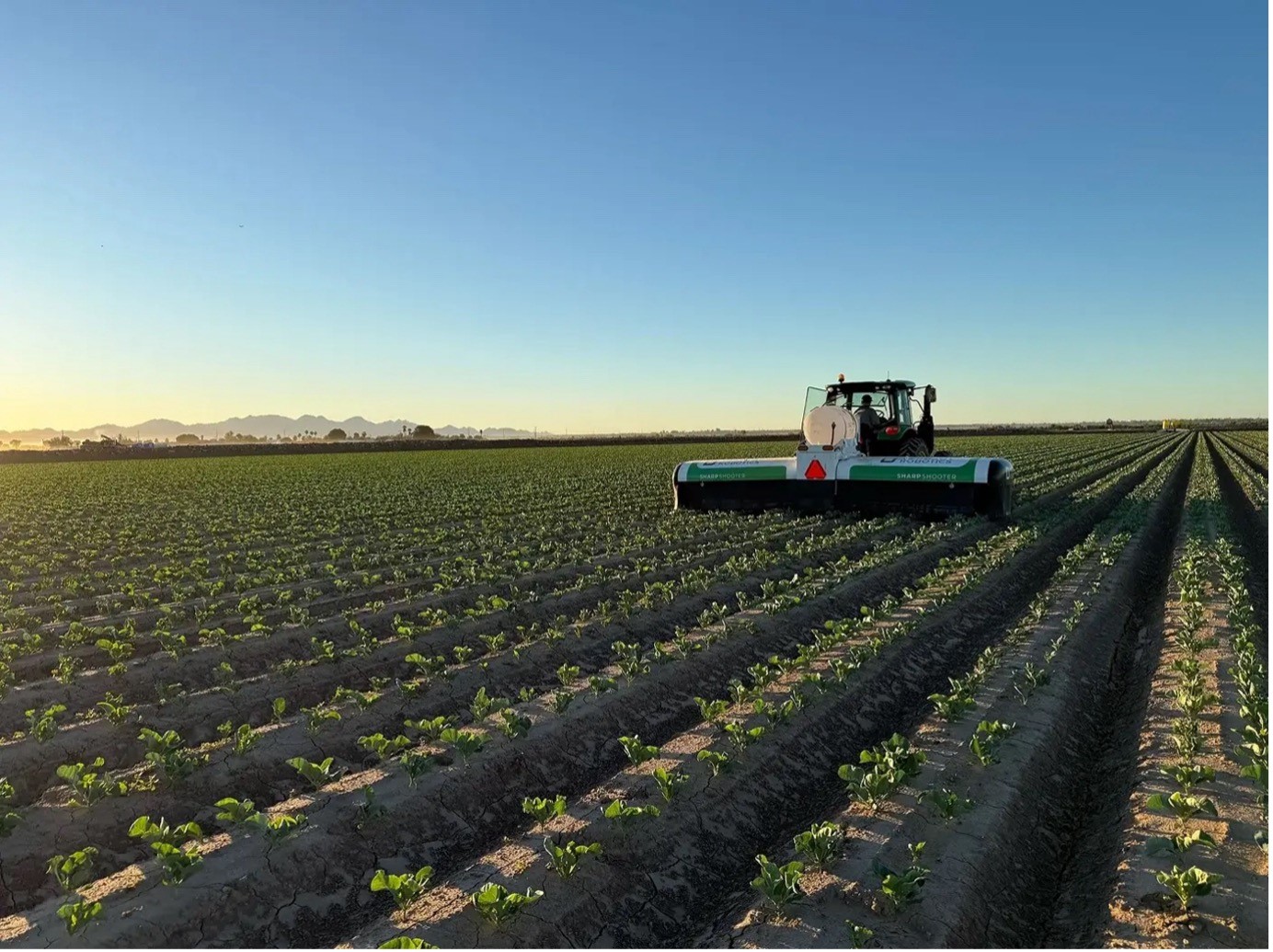
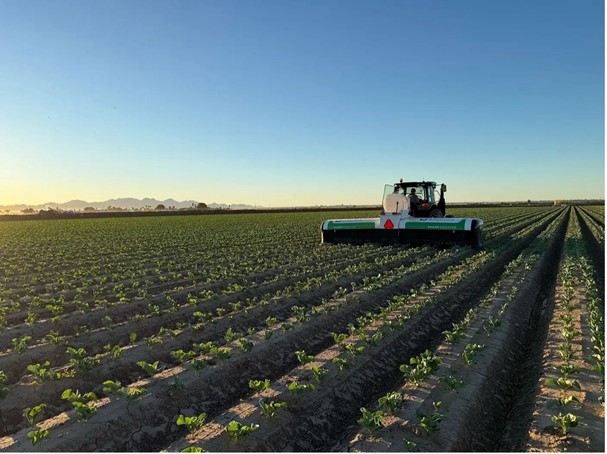
Bron: https://www.verdantrobotics.com/about-us
Physical AI is becoming economically compelling in agriculture as technology curves, climate stress and farm economics are now aligning. Robotics platforms cut chemical use by up to 99%, labor costs by up to 85%, and deliver payback in 6-18 months. Systems with a lot more precision than conventional machinery are creating defensible data moats and enabling multi‑crop scalability. The cost curve resembles the smartphone‑sensor revolution: as hardware prices fall and performance improves, software‑centric platforms disproportionately benefit. With in‑field autonomy - finally closing the loop between sensing, decision and execution - the sector is at the forefront of physical AI and investors seem to like it.
About the author

Stijn Plessers
comments powered by Disqus