Siddy holds a Master’s degree in Economics from the University of Antwerp and a Master's degree in Financial Management from the Vlerick Business School. Passionate by innovation and entrepreneurship, he also participated to an Executive Master in Venture Capital at the Berkeley Haas School of Business. Prior to joining Econopolis, he managed the Investor Relations & Treasury office at Orange Belgium, a telecom company. Siddy also held the position of Telecom, Media & Technology analyst at a large Belgian Asset Management firm. Further, he is also active in the advisory board of StartupVillage and The Beacon, a business and innovation hub in the center of Antwerp focused on Internet of Things and Artificial Intelligence in the domains of industry, logistics and smart city. At Econopolis, he is Portfolio Manager of the Econopolis Exponential Technologies Fund.
Munich: a technological look at a region that makes choices
Reflections on the VOKA business mission to Bavaria
International missions are, for me, primarily a way to understand how other regions approach technology, innovation, and competitiveness. Not to admire them, but to learn from them, and especially to see where Flanders can choose differently (and sometimes better). The recent VOKA business mission to Munich offered a fascinating laboratory for exactly that purpose.
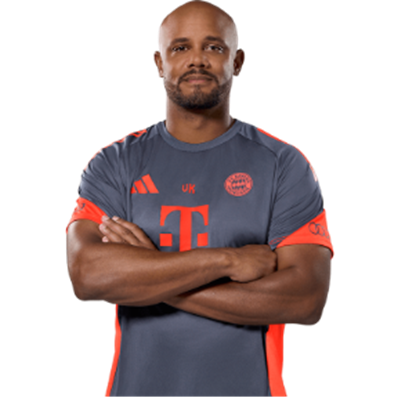
Munich is the capital and largest city of Bavaria, with roughly 1.5 million inhabitants in the city and over 6 million in the metropolitan region. Since Vincent Kompany became head coach of Bayern Munich in July 2024, the region has gained unprecedented visibility in Belgium thanks to the intense media attention surrounding the Belgian coach and his club. Bavaria is one of Germany’s 16 federal states (Bundesländer), located in the country’s southeast. It is the largest by area and the second-largest by population, with a strong economy, rich culture, and traditions such as the Oktoberfest.
Today, Bavaria is one of Europe’s powerhouses in engineering, mobility and deep tech. It leads Europe in technology and innovation patents (7,204 in recent years, ahead of Île-de-France with 5,610 and Baden-Württemberg with 5,131). The region hosts strong clusters in automotive, AI, energy and deep tech, supported by high R&D spending (3.4% of GDP, above the EU average). It counts more than 1,100 automotive suppliers, over 900 software and IT firms, 70,000 researchers in publicly funded R&D institutions, and more than €3.5 billion in annual private investment in deep tech and industrial innovation. The region is home to over 300,000 engineers, a cluster matched in Europe only by Île-de-France and Baden-Württemberg.
The Max Planck Institute, with several Bavarian sites, focuses on fundamental research in physics, biology, and materials science, while the Fraunhofer-Gesellschaft specializes in applied research and industrial innovation. The Technical University of Munich (TUM) is renowned for world-class education in technology, engineering and entrepreneurship, and Ludwig-Maximilians-Universität München (LMU) excels in interdisciplinary sciences with a strong focus on quantum technologies and artificial intelligence.
Almost as important is Munich’s rise as one of Europe’s core regions for defence technology, attracting nearly €1 billion in investment in 2024. Surrounding the city is an exceptional cluster of established players: KNDS (Leopard tanks), Hensoldt (sensor systems in Taufkirchen), MBDA (missile systems), Airbus Defence & Space (Ottobrunn) and MTU Aero Engines. At the same time, a new generation of start-ups is flourishing. Helsing has already raised €450 million for defence AI; ARX Robotics builds unmanned vehicles; Quantum-Systems supplies drones of which more than 200 operate in Ukraine; and Holo-Light develops AR/VR applications for defence. This momentum is supported by strong innovation clusters around dual-use technologies, including Munich Quantum Valley, the Digital Hub Security & Defense, and initiatives such as Kickstart Defense & Dual-Use.
In short, Munich has become one of Europe’s key hubs for engineering, mobility and deep tech. But it is not a magical region; it is a place where clear choices have been made consistently for twenty years. That is precisely what makes it relevant to analyze, not to copy, but to understand the differences.
At the same time, this mission was made even more valuable by the mix of entrepreneurs, thinkers and policymakers who joined the trip: the conversations, cross-pollinations and new connections were at least as enriching as the company visits.
A soft landing in the heart of Europe’s industrial powerhouse
It began calmly, almost ceremonially: an evening at the Bayerischer Hof, the iconic hotel that has welcomed political and economic leaders for decades. For the thirty Flemish entrepreneurs and policymakers, it was mostly a moment to connect. Scale-up founders discovered shared challenges with family-owned manufacturing firms. CEOs from sectors as diverse as logistics and tech realized they were grappling with the same questions. “We’re all here to learn,” one participant said, “but it seems we can learn just as much from each other.”
Rohde & Schwarz: technology and talent as a structural choice, not a short term project
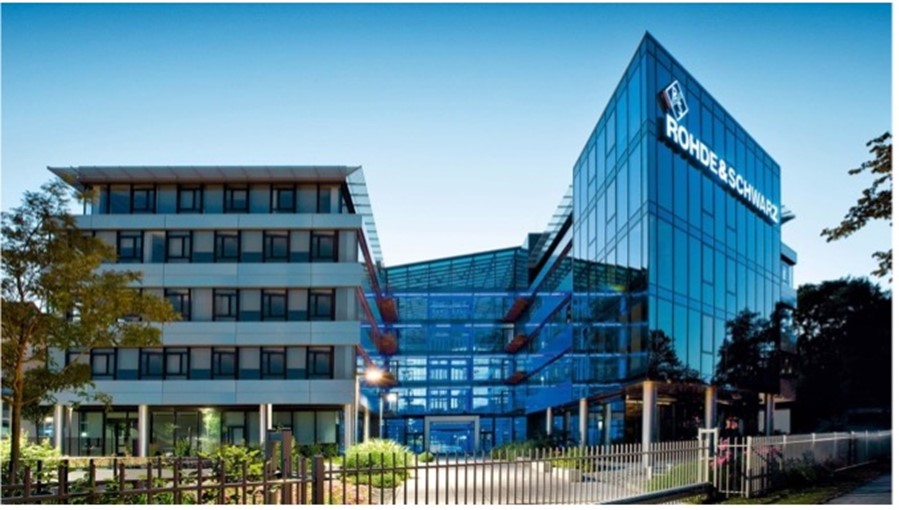
The first official visit was to Rohde & Schwarz, a 90-year-old family company that has become a global player in test & measurement equipment, cybersecurity and defence communications. With 15,000 employees worldwide, annual revenue of €3.16 billion, and 15–20% of revenue structurally invested in R&D, it is a textbook example of German industrial strength.
In defence, they supply tactical battlefield communications, drone detection and jamming systems, and encrypted communication solutions used by NATO forces worldwide. This dual-use profile, from civilian test equipment to military electronic warfare, illustrates their unique position in Europe’s defence industry.
But what struck me the most was not the impressive technology. It was the culture.
Rohde & Schwarz believes radically in vertical integration: R&D, production and training, all in-house. Where many European firms struggle to attract engineers, Rohde & Schwarz builds its own talent pipeline. Their vocational training centre is more than a training space; it is an integrated talent ecosystem where young people, from age 16, learn on the same machines and software used in production. They develop deep craftsmanship, something that is becoming increasingly rare in Flanders.
They frame this not as HR policy, but as strategic autonomy. If you want to build complex technology, you must control the entire value chain. Talent is as essential as machinery. The company invests not only in technology, but in the people who make that technology possible.
This may be the most important lesson for Flanders: innovation is not a sprint but a generational project. We have strong tech companies, but often lack the scale and long-term mindset to build such internal talent factories. We do not need to copy this one-to-one, our context is different. But we must adopt the structural vision: regions that want to play in advanced technology must strengthen their talent base. Not with slogans, but with concrete, integrated pathways. Technology is built not only with money, but with people, and with the ability to retain those people for years.
The Munich start-up scene: deep tech with structure
In the afternoon, we entered Munich’s start-up world, one that differs sharply from the stereotypical neon-lit lofts associated with start-up culture. Here, innovation clusters are professionally organized, built around universities, corporates and significant public support.
WERK1: a public incubator as strategic instrument
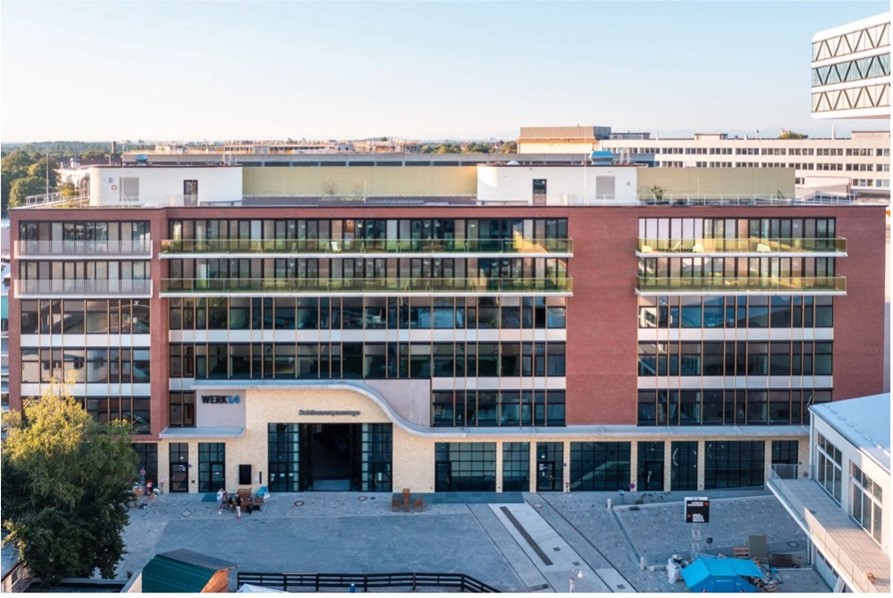
The WERK1 site breathes transformation. What is today a vibrant incubator began more than a century ago as the industrial area around the Pfanni factory, where potatoes were processed and silos and warehouses shaped the landscape. When production stopped in the 1990s, Munich did not see a lost zone but an opportunity. Throughout the 2000s, the area was gradually redeveloped: old halls housed artists and experimental culture, attracting talent and creativity. From this energy emerged WERK1 in 2013, a publicly supported tech incubator that translated the industrial mentality of “making” into digital innovation. Since the redevelopment into the modern Werksviertel-Mitte, WERK1 has become one of Germany’s largest start-up hubs, where industrial history and deep-tech futures literally sit side by side.
Notable start-ups from the WERK1 ecosystem include: Flix (FlixBus), Personio (HR software), Helsing (defence AI), ARX Robotics (unmanned systems), Quantum-Systems (drone systems), Luminovo (AI for electronics and supply chains), and Konux (AI for rail infrastructure).
WERK1 is fully publicly funded. The government chooses to support start-ups structurally, not as charity but as economic strategy. Deep-tech start-ups in quantum, AI, robotics, medtech, defence technology, receive affordable space, coaching and investor access.
Public involvement is visibly stronger in Munich than in Berlin, which traditionally relies on bottom-up B2C start-ups and private venture capital (think N26, Zalando, Delivery Hero, HelloFresh). Munich builds industry-driven innovation intentionally, through public incubators, research programmes and deep-tech clusters.
UnternehmerTUM: Stanford on the Isar
The presentation by UnternehmerTUM, one of Europe’s largest innovation hub, illustrated Munich’s ambition to dominate deep tech. The programme was built by translating the Stanford model to Munich: innovation as a system with intense interaction between academia, industry and capital. The organization has over 400 employees and works simultaneously with corporates (Siemens, BMW, SAP), governments, researchers and start-ups. It runs major multi-stakeholder projects in mobility, energy, AI and circular systems.
One striking example was the project on electric freight transport and truck charging. Instead of each company inventing its own solution, UnternehmerTUM brings together the entire value chain, from energy suppliers to logistics companies, hardware builders and software platforms. Within seven months, they develop and scale workable prototypes. This pragmatism and speed are precisely what Europe often lacks.
Does this model distort markets? Perhaps in mature sectors. But in deep tech (with long incubation periods, complex certification and huge capital needs) public support can be the necessary bridge between research and market. The lesson for Flanders is nuance: government and market can cooperate effectively, as long as we are clear about where public intervention adds value.
European defence AI at full speed
Europe’s defence AI ecosystem is entering a new phase of urgency. Russian aggression, instability in the neighbourhood, and a rapidly shifting global power balance have pushed European governments into the largest rearmament effort since the Cold War. Defence budgets are rising across the continent, and with them the demand for advanced technologies that can deliver intelligence, speed, and resilience on the battlefield. This wave of investment is transforming Europe’s tech sector from a predominantly civilian innovation engine into a strategic pillar of security policy.
Helsing's fight against democracy's modern monsters
The next morning brought what may have been the most striking session of the entire mission: the keynote by Helsing, the European defence-AI scale-up transforming the sector. Especially in the light of Germany’s 2022 decision to more than double its defense budget, from roughly 50 billion to over 100 billion euros from 2026 onward, a move approved by Chancellor Scholz’s government in response to Russia’s invasion of Ukraine. Berlin coupled that funding surge with procurement reforms designed to cut bureaucracy and open the door for startups and dual-use innovators to work with the Bundeswehr.
Helsing builds a new generation of European defence technology using edge AI, low-cost hardware and rapid iteration. With more than 330 AI engineers and €1.4 billion in venture capital (including investments by Spotify-founder Daniel Ek), the company develops software that autonomously detects targets, navigates without GPS and runs on commercial sensors. In Ukraine, their systems performed four times better than classical FPV drones. By building drones themselves and accelerating production (airframes in 7 minutes), Helsing delivers “precise mass”: many cheap, intelligent systems instead of a few expensive platforms.
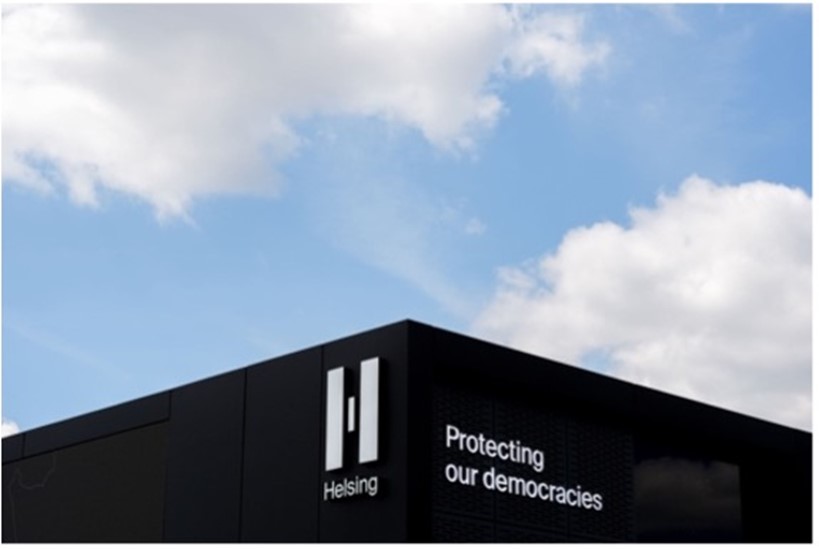
What stood out was the talent they attract: former researchers from Meta’s AI Lab in Paris, Amazon’s Berlin AI hub, and even the first engineer behind Palantir Foundry. Their motivation? “They want to work on something that matters. Not optimizing advertisement algorithms, but building technology that can protect democracies”. Just as Van Helsing fought monsters to protect humanity in the film, the defense company Helsing positions itself as a modern "monster hunter" using AI technology to defend democracies against authoritarian threats.
Their warning for 2029 stayed with many of us. That is the year Russia plans another large-scale ZAPAD military exercise. Helsing did not present this to sow fatalism, but to instill urgency: if Europe does not accelerate in AI, sensing, autonomy and defence software, it will become more dependent than ever. Technological readiness is no longer a luxury, it is a strategic necessity. That said Helsing's messaging does serve their commercial interests.
Of course, they are also a commercial company, so the message can be read as a strategic nudge to policymakers. But even with that nuance, one conclusion remains: Munich demonstrates that accelerated defence innovation is not only possible, but already in full motion.
From observation to strike: how Quantum-Systems gave birth to Stark
Next came a short introduction and company tour at Stark Defence, not to be confused with Stark Industries from the Marvel films, although the name resonates. Here, too, a new generation of defence technology is emerging, more grounded, but distinctly European.
STARK is a recent spin-off from Quantum-Systems and is building attack and reconnaissance drones and has raised $100 million from investors, including Sequoia Capital, Peter Thiel’s Thiel Capital, and the NATO Innovation Fund. Some of Quantum’s investors did not want involvement in weaponized drone development, so the company was split: Quantum-Systems remains focused on reconnaissance platforms, while STARK develops loitering munitions and other strike-capable drones. The two firms still collaborate technologically: Quantum’s reconnaissance drones feed data to STARK’s attack systems in “hunter-killer” configurations. The spin-off illustrates how Europe’s drone ecosystem is rapidly specializing, with dedicated teams for civilian, dual-use and military applications.
For me, this was especially relevant from a technology perspective: hardware, sensors and AI are converging again. The region that understands this, and organizes itself around integrated value chains, will commercialize innovation the fastest. Flanders has strong niches in mechatronics, optics and semiconductors. The question is: can we connect these niches to a broader vision?
Culture as context: a visit to the Alte Pinakothek
After so much technology, the cultural component offered a welcome moment of reflection. The tour of the Alte Pinakothek, with its rich collection of Flemish masters, was a reminder that innovation always springs from a tradition of craftsmanship, imagination and experimentation.
The contrast between digital futures and centuries-old paintings was refreshing. It illustrated how identity, heritage and creativity remain foundational, even for technological progress.
BMW Welt: a showcase of industrial reinvention
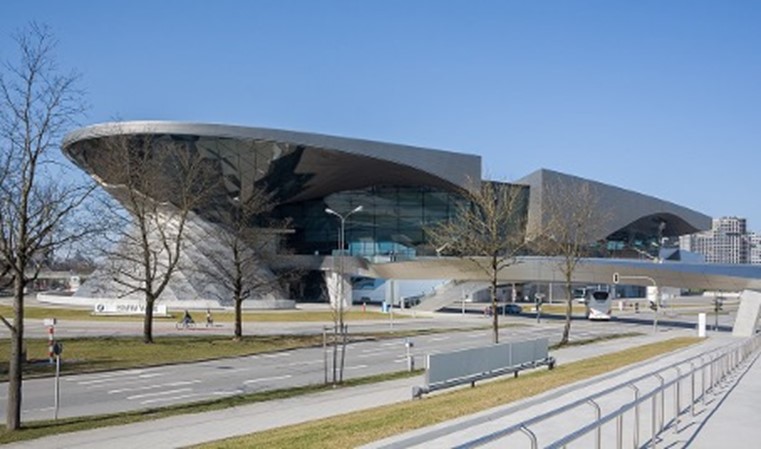
On the final day, we visited BMW Welt, the brand’s architectural landmark and its most important public interface. The building itself, a sweeping glass-and-steel structure overlooking BMW’s headquarters and the historic factory, is designed as a statement: this is where the past, present and future of Bavarian industry converge.
BMW is shifting from a traditional car manufacturer to a software-driven mobility company: vehicles are becoming computers on wheels, built around central software architectures, over-the-air updates, and advanced autonomous features. The upcoming Neue Klasse platform (from 2025–2026) is designed to anchor this transformation, with new electric drivetrains, upgraded computing power, and a completely redesigned electronics architecture. The core lesson: industrial renewal is not about individual products but about structure, culture, and long-term strategic choices.
It was a powerful intellectual reminder in a week full of high tech: progress is a culture, not a spreadsheet.
About the author
Siddy Jobe