#MacroFriday: A Gloomy Year-End for the US Labor Market
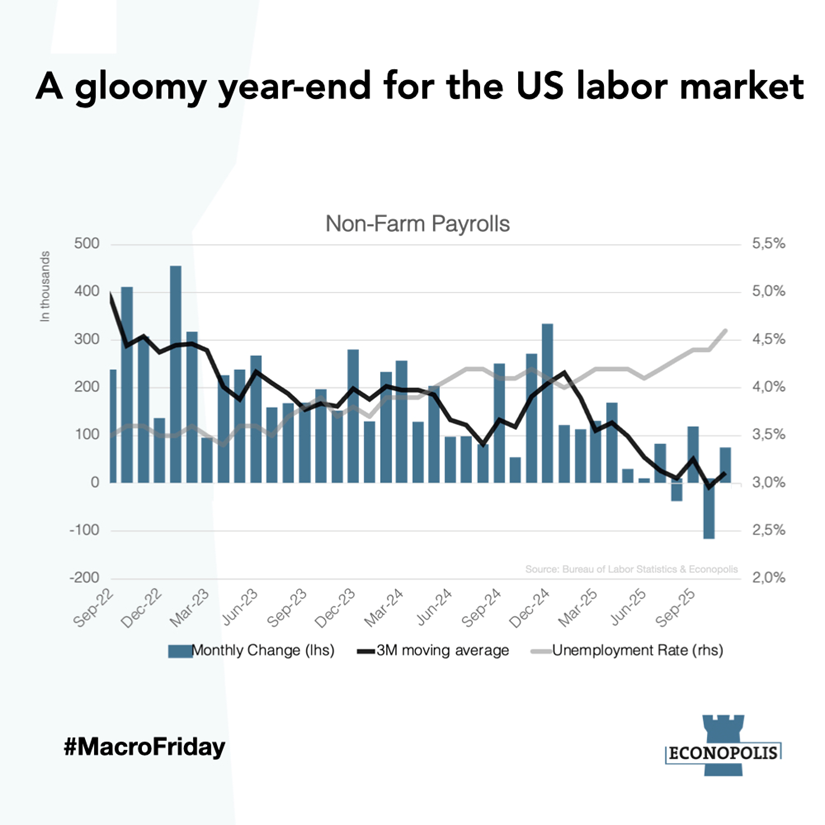
Initially, I planned to write about the heavyweight role of the pharmaceutical sector in Denmark’s industrial production growth, but I lost my appetite when I saw the publication of the lagged US jobs reports for October and November.
Due to the recent US government shutdown, the October and November labor market data were published later than usual. Nonetheless, the data reaffirmed labor market weakness. While the September and August data were revised lower by 33,000 jobs, October stood out with 105,000 job losses. These numbers were heavily influenced by federal employees who accepted President Trump’s deferred resignation offer. In November, the US economy did create 64,000 jobs. This jobs report came after last week’s surprising statement by Fed Chair Jerome Powell that job creation data might be overstated by 60,000 per month.
While job creation in the US economy has clearly cooled over the last three years, the unemployment rate also slowly picked up, reaching 4.6% in November. The deterioration of the US labor market is continuing at a slow but steady pace and highlights why the Fed is now looking more at labor market developments than at inflationary pressures. The souring labor market is weighing on the already pessimistic consumer sentiment and might influence consumer’s spending appetite going into the year-end holidays. Fortunately, November inflation came in at 2.7% yesterday, well below economists’ estimates. However, it should be noted that the price data were gathered during the second half of November and may have been influenced by “Black Friday” price reductions.