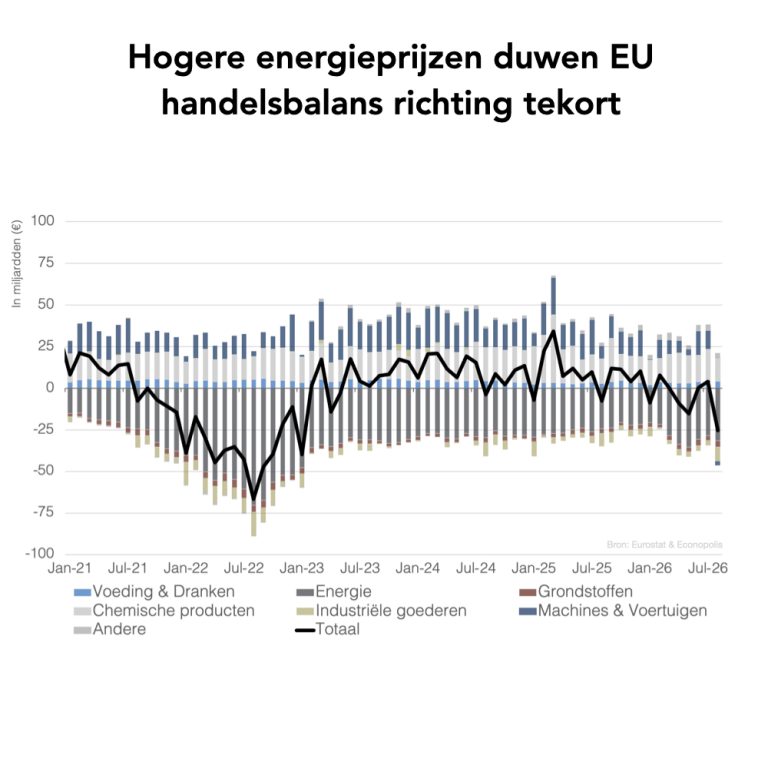
The rising energy prices are once again on the European trade balance, but the weakening in the trade balance of machinery and vehicles calls for more structural questions .
The European trade balance deteriorated sharply in August, with a deficit of 25.2 billion euros—the largest since January 2023. This decline was primarily driven by a widening trade deficit in energy (31.4 billion euros), as energy import prices rose sharply over the summer. With energy prices having risen further in recent weeks, the European import bill is likely to remain high, putting additional pressure on the trade balance. The 2.5 billion euro deficit in trade in machinery and vehicles was also notable. It was the largest deficit in this category in more than 25 years and only the second deficit during that period, following the -0.5 billion euro deficit in April 2020. The deteriorating trade position could gradually begin to weigh on the EU’s economic growth as well.
Apart from the immediate energy shock, the deteriorating European trade balance exposes two structural vulnerabilities: declining industrial competitiveness and a persistent dependence on imported energy. The weakening trade position in machinery and vehicles is particularly concerning against the backdrop of increasing international competition. One of the traditional drivers of the European trade surplus is thus coming under increasing pressure. As for energy supplies, the European Commission confirmed just last week that, despite gas reserves that are well below the historical average, the EU is significantly better prepared for the winter than it was in 2021–2022. They point to greater diversification of energy suppliers, a more extensive LNG infrastructure, and lower gas consumption. Nevertheless, greater energy independence remains essential for Europe. Accelerated investments in renewable energy and energy infrastructure are crucial to reducing exposure to volatile international energy prices, strengthening the competitiveness of European industry, and supporting sustainable economic growth within the EU.