
U.S. core inflation is rising, and so are the Federal Reserve's concerns.
The minutes of the October meeting of the U.S. Federal Reserve’s (Fed) Federal Open Market Committee pointed to further tightening. Virtually all members considered further tightening of monetary policy appropriate, given that core inflation is picking up again and both energy prices and the strong wave of investment in artificial intelligence are viewed as significant upside risks to inflation. Furthermore, the minutes show that the Fed is increasingly concerned about the risk that temporary price shocks—particularly in the energy sector—could lead to persistent and broad-based inflationary pressures.
Still, there are two factors that could cool overall inflation without the Fed having to intervene itself. First, base effects: U.S. energy prices rose by as much as 10.9% in March of this year. Starting in March 2027, this price shock will gradually fade from the year-over-year comparison. As a result, energy’s contribution to overall inflation would decline sharply, as the Fed’s own economists also expect. Second, politics: Now that the Democrats have captured both the House of Representatives and the Senate in the midterm elections, politics could also put the brakes on inflation. The rapid expansion of data centers proved to be a key issue for voters. Stricter restrictions on new projects could slow investment in AI infrastructure and thus reduce demand pressures in the economy. At the same time, however, this could also put a brake on economic growth. The important caveat is that neither of these disinflationary forces is guaranteed.
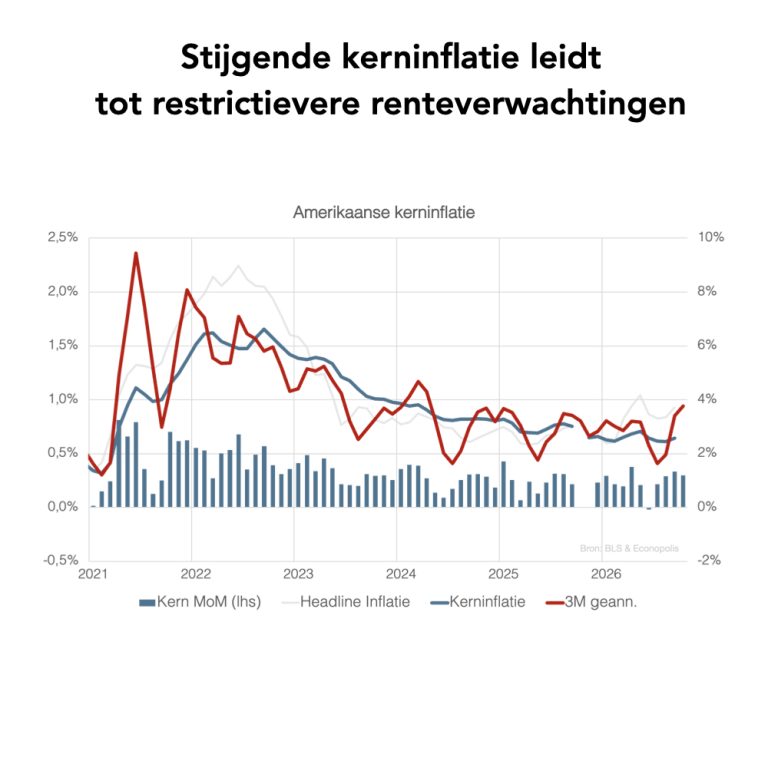
For now, the financial markets are already pricing in another interest rate hike by the Fed in December. A 25-basis-point hike is fully priced in, while even a larger 50-basis-point move cannot be ruled out. One of the Fed’s board members even suggested that such a significant move might be necessary to shock the market and the economy, now that inflationary pressures are spreading more widely. The chart illustrates how core inflation—particularly the three-month, annualized rate of increase—is accelerating once again. This rise is driven, among other things, by higher prices for housing, hotel stays, and insurance. This may indicate a broader increase in cost pressures, possibly also resulting from higher energy prices trickling down to other goods and services.
The release of the latest U.S. inflation figures, combined with the increasingly hawkish tone of various Fed officials, has led to a sharp repricing in the bond markets over the past two weeks. The U.S. two-year yield rose by more than 40 basis points in just a few days, while the ten-year yield climbed by over 30 basis points. Meanwhile, the U.S. dollar has also strengthened. The currency gained more than 2% in value over the past month and is already up 5.5% since the beginning of the year.
