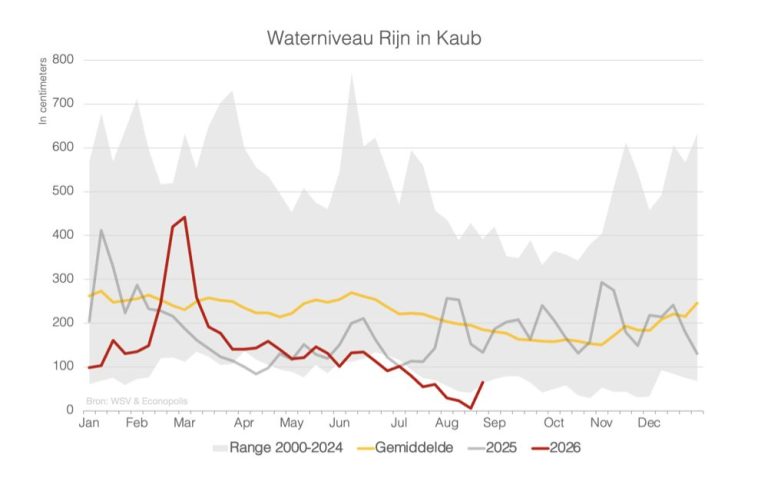
The warm and dry European summer made water levels on the Rhine one of the most closely watched macroeconomic indicators. The gauging station in Kaub, located at one of the shallowest points of the Rhine, dropped to a record low of barely 6 centimeters in August, after which rainfall later in the month provided some relief. Low water levels do not necessarily bring shipping to a standstill, but ships do have to carry significantly less cargo. As a result, more ships are needed to transport the same volume, while rail and road transport can be used as less efficient alternatives. The result, however, is a sharp increase in freight costs. The water level in Kaub is particularly important for the petrochemical, chemical, and pharmaceutical clusters around Ludwigshafen and Mannheim, which are located further upstream along the Rhine. A prolonged period of low water levels could dampen economic activity in this region, as companies may have to scale back their production. But Switzerland is also at risk: more than 8% of Swiss imports and exports pass through the Rhine ports.
And yet it is somewhat paradoxical that Germany’s key business confidence indicator, the IFO index, is bucking the trend and has been rising for four consecutive months. The most recent improvement was evident both in the manufacturing sector and in companies’ expectations regarding the future business climate. The substantial German fiscal stimulus thus appears to be gradually filtering through to domestic demand and business confidence. This helps to offset some of the persistent pressures on industry, such as high energy prices. Some extra rain and higher water levels on the Rhine could provide additional relief.