

After the historic turbulence in the bond markets in 2022 proved to be past months once again particularly challenging for bond investors. Within the eurozone , especially the French bond market is in the spotlight, where the warning signs grow louder sound. As investors become become concerned about about the sustainability of the French public debt, the 10-yearyield on French government bonds has risen to nearly 5%, the highest level since 2002. A budget deficit of more 5%, a rising debt ratio of currently 119% of GDP and the political uncertainty in the run-up to the presidential election in April undermine the confidence in the ability of France to provide the necessary fiscal discipline to restore. The consequences are clearly visible in Le Spread, the interest rate differential that investors demand to hold French instead of German government bonds to maintain hold. Previously, we we a interest rate differential of 80 basis points already if a warning sign. This week , that spread , however, rose to about 140 basis points, well over in theconsidered hazard zone and again at levels that we for the last saw during the European debt crisis.
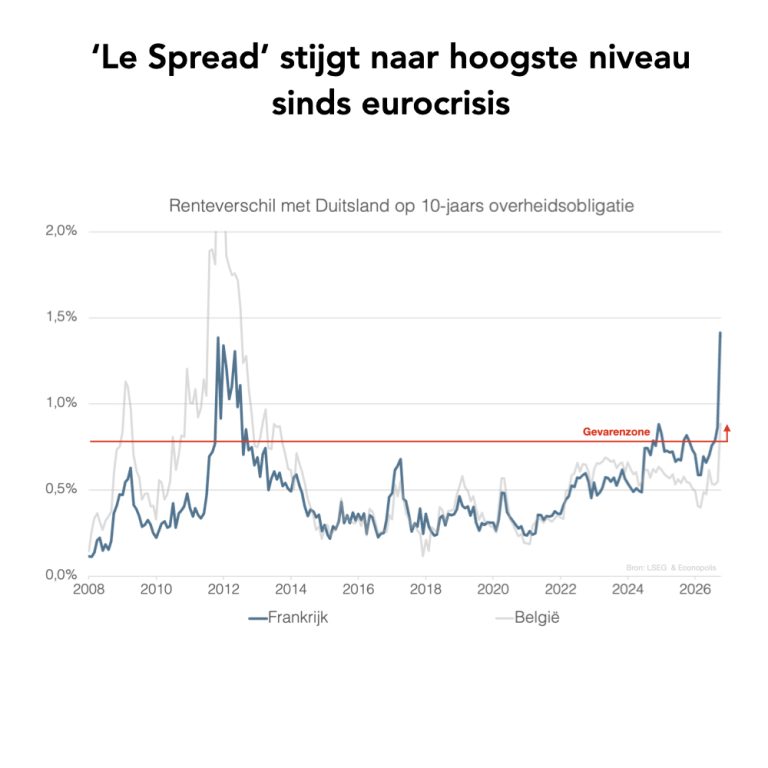
Although France is currently the center of attention, the consequences extend far beyond the borders of the French hexagon. Yield spreads have also widened in other eurozone countries considered to have lower creditworthiness. This is fueling concerns about renewed fragmentation of the European bond market. Although the European Central Bank introduced its Transmission Protection Instrument (TPI) in 2022 to counter “unjustified” market fragmentation, it is not the ECB’s role to resolve governments’ fiscal problems. Investors should therefore not simply assume that the ECB will automatically intervene to curb widening interest rate spreads between eurozone countries. This was also emphasized this week by Emmanuel Moulin, governor of the Banque de France, who explicitly stated: “It is not the ECB’s role to solve countries’ fiscal problems. Its task is to combat inflation and keep it around 2%.” The growing political risks within the eurozone are also being felt in the currency markets, where the euro has lost ground against the U.S. dollar. The message from the bond markets is clear: fiscal discipline and fiscal credibility are once again key parameters. Countries that fail to get their public finances in order will ultimately pay a higher price for it.