

This week, investors’ attention turned to the global rise in long-term interest rates. The rising borrowing costs for the U.S. government drew particular attention, with the 10-year U.S. Treasury yield climbing to 4.7% and the 30-year yield hitting 5.3%, its highest level since 2007. Several factors drove this movement: the protracted conflict in the Middle East and rising oil prices are fueling inflation expectations that are being priced into the market, while large bond issuances by hyperscalers to finance their AI infrastructure plans are competing for investors’ capital. Support from central banks seems unlikely as long as inflation remains above target. The Federal Reserve is keeping its balance sheet stable following a period of balance sheet reduction, and the new chair, Warsh, is also known as a critic of a large Fed balance sheet, while the ECB continues to reduce its balance sheet. However, we must keep in mind that the ECB is keeping its Transmission Protection Instrument (TPI) in reserve for when interest rate differentials between countries threaten to spiral out of control.
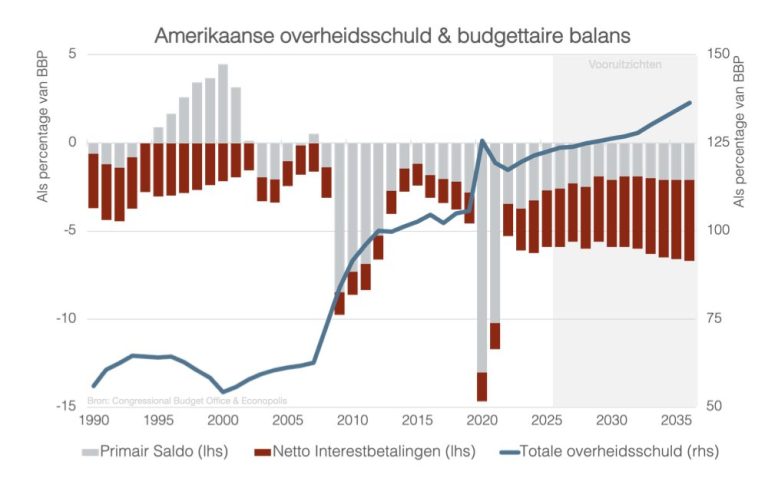
On Wednesday , Scott Bessent, head of the U.S. Department of the Treasury, attempted to calm the financial markets by announcing measures to shorten the maturity of outstanding debt. Within a day, however, investors had already almost completely reversed the initial decline in long-term interest rates. While the debt burden of households and businesses is in relatively good shape, the same cannot be said for the mountains of government debt. Markets are now pushing governments toward structural reforms and fiscal discipline, as bond investors are becoming increasingly selective and sensitive to current developments—even when it comes to historically safe havens such as U.S. Treasuries. The CBO estimates that the budget deficit will exceed 5.5% annually over the next ten years, fueled by rising interest expenses. These deficits must be financed somehow. In doing so, interest expenses will rise to two-thirds of the total government deficit, and the threat of an interest-rate snowball effect is growing. However, none of the political parties in the U.S. seems willing to address this problem. We’ve singled out the U.S., but the same story applies to many European countries, which are also grappling with rising financing costs and growing concern among bond investors.