
Canada may be be known for its politeness, the reaction to the renewed trade tensions with the U.S. is anything but passive.
During the summer, trade tensions between the U.S. and Canada flared up again and reached a new boiling point. Washington imposed additional import tariffs of up to 50% on a range of Canadian goods, particularly in sectors such as automobiles, dairy products, and alcoholic beverages. Canada, in turn, responded by suspending trade talks and announcing similar counter-tariffs on certain U.S. imports, including steel, dairy products, agricultural machinery, household appliances, and electronics. Nevertheless, the majority of trade between the two countries—approximately 85%—remains exempt from import duties under CUSMA, keeping the broader economic impact of the conflict relatively limited. However, the consequences will be felt much more acutely in specific sectors and regions that are heavily dependent on cross-border trade and historically tightly integrated North American supply chains.
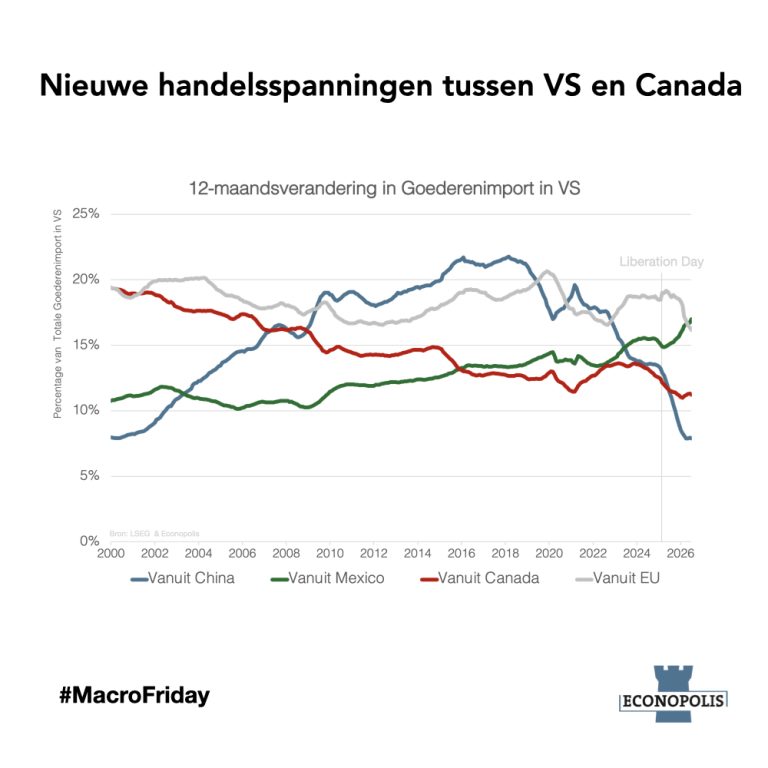
Canada’s share of the U.S. import market declined and, after China, experienced the second-largest drop among the U.S.’s major trading partners: from 13.4% in early 2024 to 11.2% in July. Although Chinese exports to the U.S. appear at first glance to have fallen sharply, it is likely that some of those goods are being rerouted through other countries before eventually reaching the U.S. market. Consumers wield considerable economic power, and Canadians are increasingly voting with their wallets. A clear “Buy Canadian” mentality has emerged, in which domestic producers are being deliberately supported. While the U.S. remains Canada’s primary source of imported goods, Canadian consumers are increasingly signaling their desire to spend less on American products.
Meanwhile, Europe is moving in the opposite direction. European Commission President Ursula von der Leyen proposed offering Canada a new form of associate membership, as both parties seek to further strengthen their economic and strategic ties. Exactly what such a partnership would look like remains to be determined, but it is clear that both sides want to collaborate more closely in areas such as energy, critical raw materials, defense, and technology. While some are building walls, others are building new bridges.