

The flash PMIs for September drew attention this week , showing a remarkably strong surge in economic activity in both the U.S. and the eurozone . On Wednesday morning, the figures for the eurozone pointed to a broad-based acceleration in business activity across the region. Purchasing managers reported that new orders rose at the fastest pace in more than four years, a sign that demand is picking up and that government fiscal stimulus measures appear to be making their way into the economy. The biggest improvement occurred in the services sector, while the manufacturing sector continued its recovery following the downturn at the start of the year. S&P Global noted that the latest PMI figures are consistent with quarter-over-quarter growth in European GDP of approximately 0.4%.
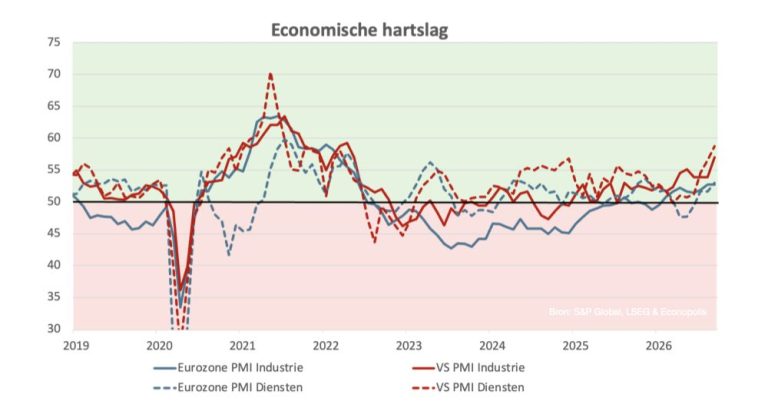
A few hours later, S&P Global released its forecasts for the U.S. economy…and those figures were even more striking! While the manufacturing sector continued to benefit from massive investment plans in AI infrastructure and resilient consumer demand, the rebound in the services sector was among the strongest in the survey’s history. According to S&P Global, the September figures are consistent with an annualized growth rate of approximately 4% for the U.S. economy. This acceleration was accompanied by strong growth in new orders, while the backlog of orders continued to rise. This indicates that demand is increasingly outpacing available capacity. This, in turn, is contributing to renewed price pressure.
The release of these impressive economic figures dealt yet another blow to global bond markets, where interest rates were already rising sharply. The Belgian 10-year yield has risen by more than 50 basis points since early August to about 4.2%. Meanwhile, the yield on the U.S. 10-year Treasury note rose above its 2023 peak and reached its highest level since July 2007. The U.S. 30-year yield even climbed to its highest level since 2004. Despite various headwinds, the economy is proving remarkably (almost alarmingly) resilient. This resilience is supported by strong demand and a robust investment cycle among businesses, as well as by continued government “deficit spending.” However, this economic strength comes at an increasingly high price: financing costs are rising rapidly, creating an additional headwind for governments, businesses, and households.