
I don't want to talk about central banks and monetary policy every week, but sometimes developments are simply too important to ignore. Wednesday's decision by the Federal Reserve was one such moment.
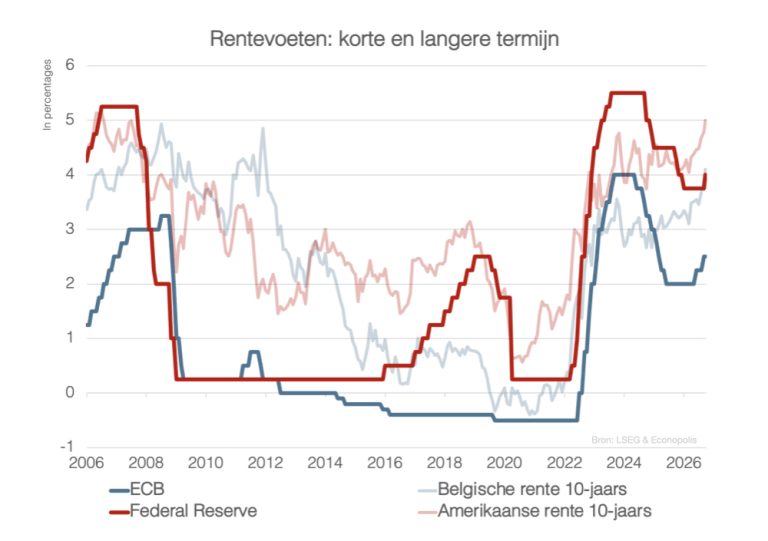
The Fed raised its policy rate by 25 basis points to a range of 3.75–4.00%, marking the first rate hike in more than three years. The updated dot plot, which reflects Fed policymakers’ estimates of the appropriate path for interest rates, suggests they are not done yet. The median projection points to one more rate hike by the end of 2026, after which the rate would remain at that level throughout 2027. The markets are taking it a step further and are currently pricing in about three additional 25-basis-point rate hikes over the next twelve months. This is a remarkable turnaround: at the start of the year, markets still expected the Fed to cut rates twice in 2026, while by the end of spring, expectations had already shifted toward little or no monetary easing. The Fed’s shift in course is supported by an economy that continues to grow at a solid pace and a labor market that remains in good shape. This gives policymakers room to focus more explicitly on inflation. Following Kevin Warsh’s strong remarks in late August at Jackson Hole, last Friday’s inflation report further strengthened the case for action. This move also means that monetary policy in several key economic regions is once again moving in the same direction: the ECB has resumed interest rate hikes, Japan remains on a tightening path, and now the U.S. is joining them. At the same time, the sharp rise in long-term interest rates is leading to tighter financial conditions, independent of the central banks’ policy rates.
Last Friday’s U . S. inflation report made it clear why the Fed remains concerned. Total inflation stood at 3.4% on a year-over-year basis, while monthly core inflation came in slightly higher than expected. Still, the inflation picture is not alarming across the board. Much of the recent acceleration in overall U.S. inflation is driven by energy prices: gasoline prices rose 3.9% in August and, on their own, accounted for more than a third of the monthly increase in the CPI. Excluding energy, year-over-year inflationary pressure is less pronounced, although the recent report shows that underlying inflation is certainly not gone. The extent to which the Fed will ultimately tighten policy will therefore depend not only on the magnitude and duration of the energy shock—and especially its potential second-round effects—but also on whether underlying inflation, economic demand, and the labor market remain resilient. The story is different for long-term interest rates. Their recent rise reflects a broader combination of factors: stronger expectations for real economic growth, higher expected policy rates, government budget spending, greater financing needs, and a higher term premium. In other words: even if the oil shock eventually subsides, a rapid return to the era of cheap money seems unlikely.