
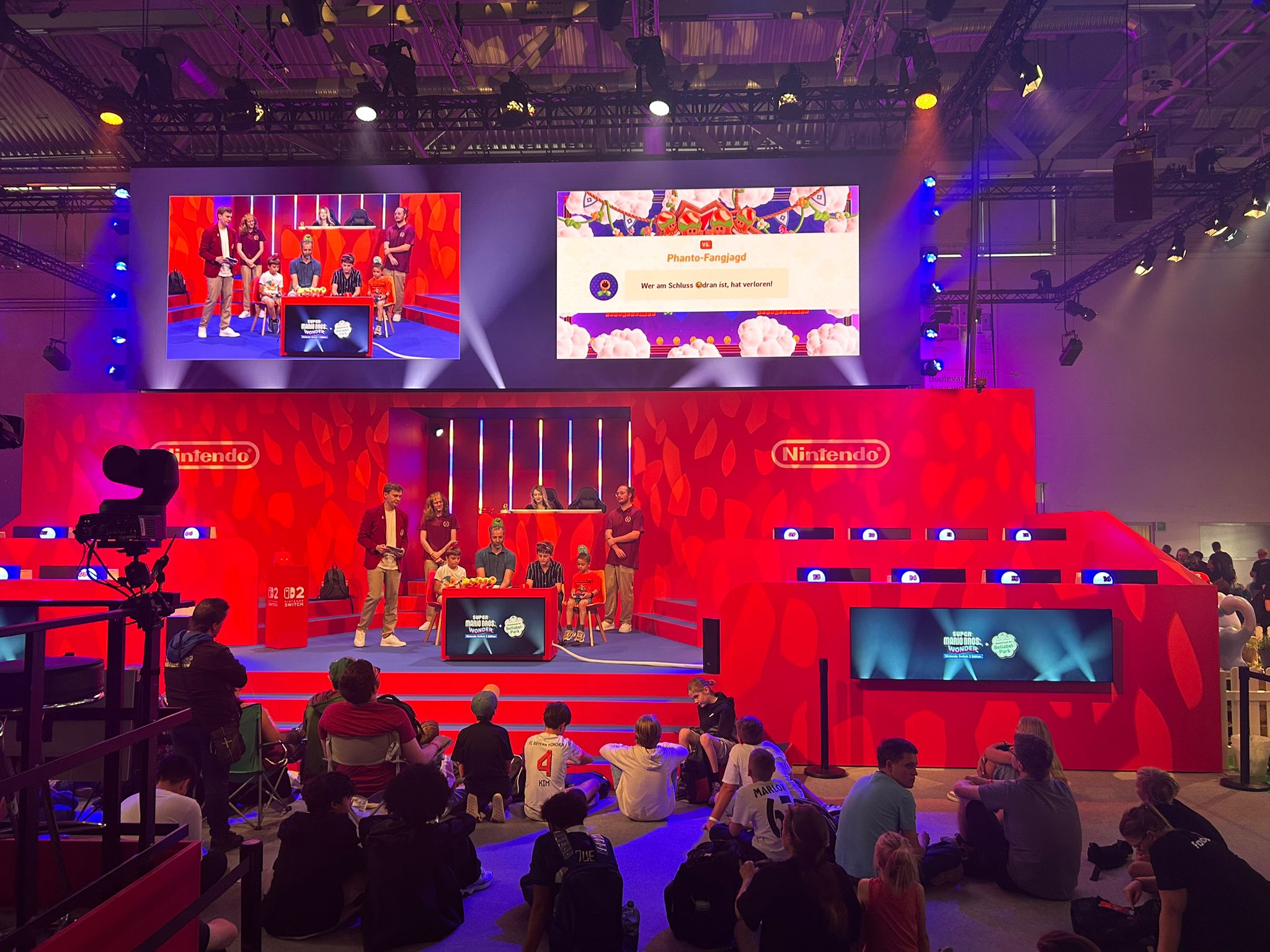
My colleague Matisse (equity analyst) and I (portfolio analyst) traveled to Cologne for Gamescom, the world’s largest computer and video game event, to deepen our knowledge of the gaming industry. Gamescom is the place where the industry showcases its next generation of games and hardware.
During our trip, we deliberately focused on two key areas. On the one hand, the latest developments from the major game developers (Nintendo, Tencent, Konami). On the other hand, the hardware and chips needed to run this generation’s games in the first place.
In Belgium, games are not only played but also developed. Through its Game Fund, the Flemish Audiovisual Fund (VAF) supports independent game studios in Flanders and Brussels, from the initial prototypes through production and promotion. In this way, it helps local developers bring their ideas to life and reach an audience. Training local talent also plays an important role in this. At Howest University College in Kortrijk, the internationally acclaimed bachelor’s program in Digital Arts and Entertainment prepares students for careers in game development, digital design, and 3D animation, among other fields. Larian Studios is one example that proves Belgian creativity can make a global impact. Founded in Ghent, the studio behind the Divinity series and the multi-award-winning Baldur’s Gate 3 is an international flagship of the Belgian gaming sector.
Artificial Intelligence in Gaming
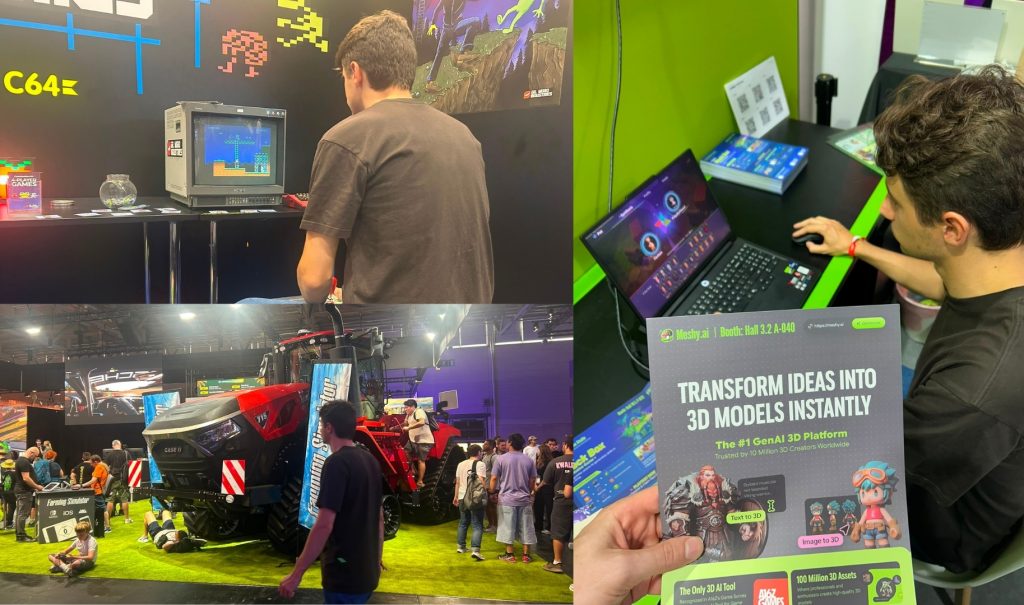
We also picked up the controller ourselves every now and then. One game really stood out: “Project Black Box” by Meshi.AI, a game in which artificial intelligence adapts the gameplay as you play. The character and his powers evolve along with your playstyle, ensuring that no two sessions are the same. When we asked the developer if AI had been used in the game’s development, the answer was, surprisingly, no.
That distinction is more important than it seems. AI in games generally takes two forms. The first is in-game AI: intelligent, adaptive characters and systems that adjust as the game progresses. The second is AI in development: tools that generate 3D models, textures, animations, dialog, and even code. Studios are increasingly using the second category to drastically shorten production time. At the same time, human oversight remains crucial, as the debate within the industry over copyright, training data, and quality consistency is still in full swing. Therefore, a developer’s conscious decision not to use AI in the production process is also a strategic signal.
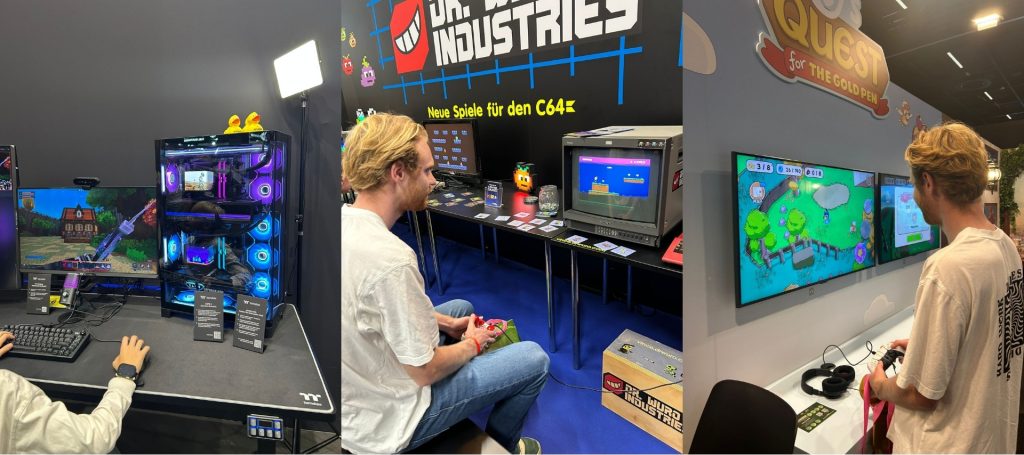
Nintendo: The lines don't lie
Nintendo’s popularity was impossible to miss: long lines and crowded booths. With the Switch 2 taking center stage, Nintendo showcased a wide lineup of playable titles, ranging from first-party exclusives like *Nintendo Switch Sports Resort*, *Splatoon Raiders*, and the new *Pokémon Pokopia* expansion to major third-party titles. The most notable guest was Call of Duty: Modern Warfare 4, which is returning to a Nintendo console for the first time in over a decade. For a console still in its early years, such a diverse lineup sends a powerful signal to both players and the market.
The engine under the hood: NVIDIA and AMD
None of these games will run without the chips. The games of this generation place such high demands that the graphics chip has effectively become the gateway to the gaming experience. Two names dominate this landscape. NVIDIA sets the high-end standard with its RTX 50 series (Blackwell architecture). AMD counters with the Radeon RX 9000 series (RDNA 4), which scores particularly well in terms of price-performance ratio.
The Rise of the Simulator
In addition to classic fiction games, a second trend stood out: so-called “simulator” games are clearly gaining ground. Farming Simulator, Bus Simulator, and truck and flight simulators had a strong presence and attracted a broad audience. It’s a genre that doesn’t rely on spectacle or marketing budgets, but rather on long-term player engagement—and thus on stable, recurring revenue for the studios behind them.
The Long-Awaited GTA VI
My colleague Matisse and I were missing one big name at Gamescom: GTA VI. After two delays, the game’s launch is finally approaching. The game is set in a fictional version of Miami and returns to Vice City. Unfortunately, the run-up wasn’t without its problems. In April 2026, Rockstar confirmed a data breach in which the hacker group ShinyHunters gained access to the company’s Snowflake cloud environment. Rockstar was able to minimize the damage and stated that only a limited amount of non-material business information was compromised, with no impact on the organization or players.
Expectations for the game are sky-high. Rockstar opted not to release a traditional YouTube trailer, but instead entered into an unexpected partnership with Netflix. On August 27, 2026, Netflix exclusively streamed more than 26 minutes of footage worldwide that showed actual gameplay for the first time.
From an investor's perspective, GTA VI is more than just a game: it is an event that will influence the financial results of Take-Two and consoles such as Sony's PlayStation.
From the trading floor to the investment case
A day at Gamescom ultimately amounts to a day of market observation. What becomes apparent on the show floor eventually translates into the financial results of publicly traded companies: the content companies that own the franchises (Nintendo, Tencent, Konami, and others), the platform and distribution companies that reach the players, and the hardware and semiconductor manufacturers that provide the computing power driving this generation. The rise of AI adds yet another dimension to this: it influences both the cost structure on the production side and the demand for computing power and chips on the hardware side.
For those who view the gaming industry as an investment, the key question isn’t which game is the most fun to play, but which links in that chain structurally create and retain value: franchise strength, recurring revenue, and the underlying technological infrastructure. Gamescom doesn’t offer any stock price predictions, but it does provide something just as valuable: a glimpse of what game enthusiasts are already lining up for today.
Disclaimer: This blog post is for informational purposes only and does not constitute investment advice, an offer, or a recommendation. Past performance is not a guarantee of future results.