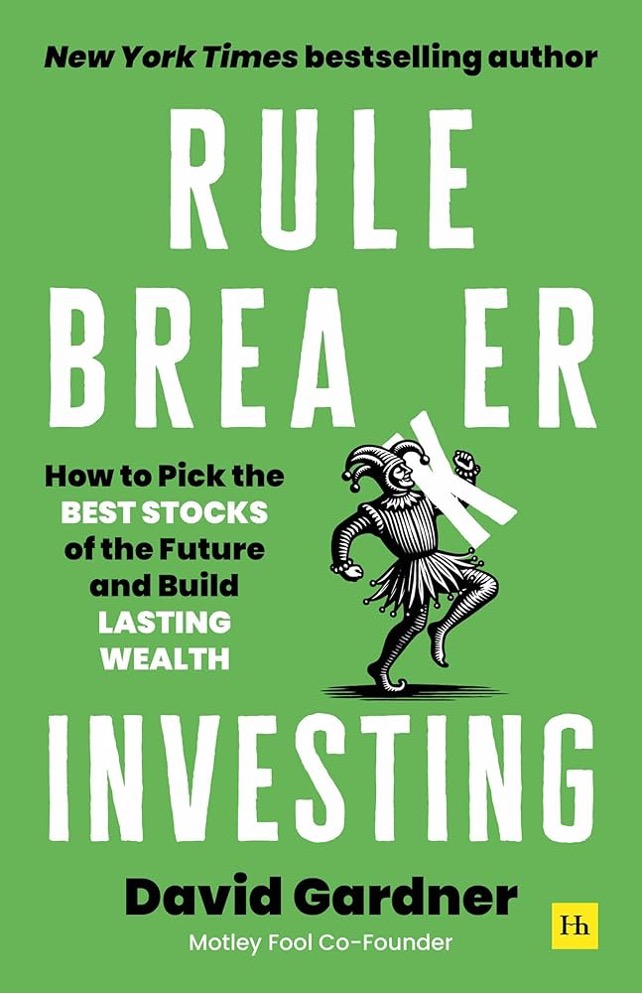

*Rule Breaker Investing* is a book published in September 2025 and is exactly what the title suggests: investing while breaking the usual investment rules. Below, we discuss one of those rules. In total, the book covers six of them.
Don't throw good money after bad
One of the book’s first suggestions is not to invest additional money in a losing position. In English, this is often referred to as “doubling down.” Suppose an investor buys a stock at 100 and the stock price drops by half to 50. The company we were enthusiastic about at a price of 100 is now trading at 50, so according to conventional wisdom, we should be even more enthusiastic about the stock. As a result, many investors tend to double their position (“doubling down”), bringing their average purchase price down to 75.
The book advises against doing this for several reasons. The first reason is purely mathematical. Losing is more painful than winning when it comes to investing. Suppose a stock’s price halves from 100 to 50. That represents a return of -50%. However, to recoup the original investment of 100, the stock must rise by 100% (from 50 to 100). Even after such an exceptional rise, the investor has not yet made a profit.
The second argument is psychological. In general, investors find it difficult to sell at a loss. That’s why many prefer to wait for years so they can eventually sell at or near their initial purchase price. When a stock’s price falls, the market is saying it disagrees with your analysis—at least in the short term. It’s possible that the market is wrong and will eventually prove you right, but that can take a long time. The famous investor Howard Marks aptly said,“Being too far ahead of your time is indistinguishable from being wrong.”
Instead, the book recommends “adding up.” The idea is that an initial investment is made based on certain expectations for the company. If the company delivers as expected—and this is reflected in a rising stock price—additional shares can be purchased. The market then effectively endorses our initial analysis.
We apply a similar philosophy to our funds. When it comes to a relatively concentrated, conviction-driven portfolio (8 to 20 holdings), it’s counterproductive to keep investing money in underperforming stocks. Instead, we want to let our winners run and even buy more along the way—in other words, water the flowers.
In summary: The book advises buying more shares in companies that are performing well and not putting any extra money into companies that are underperforming. Sounds logical? Yet most investors do the opposite. “Selling your winners and holding your losers is like cutting the flowers and watering the weeds.”